Start with the load and placement
- What does the load weigh at the maximum placement distance?
- How high and how far forward must the forks reach to set the load?
- Can the machine square up to the destination, or will side-shift help align it?
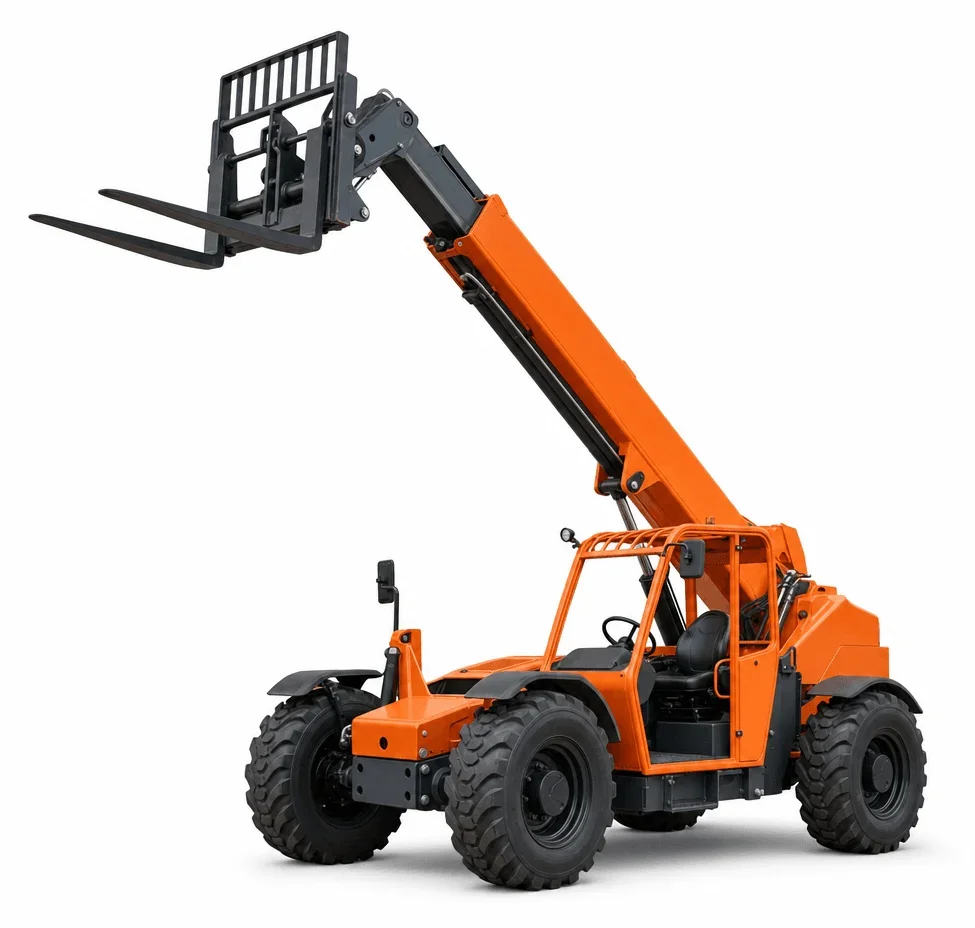
Capacity charts drop as the boom extends. Knowing the heaviest unit at the farthest placement prevents oversizing for height alone.
Odessa jobsite realities
Outdoor staging areas around industrial sites and logistics buildings often mix packed soil, gravel, and slab. Telehandlers with rough-terrain capability handle these transitions, but overall width and turning radius still govern movement between laydown and building doors. Heat and dust are constant; planning fewer long shuttles and more efficient set points can shorten exposure windows.
Measurements that narrow choices
- Maximum lift height and forward reach needed for the heaviest load
- Carriage type needed for the load (standard, side-shift, or rotating)
- Pallet dimensions and fork length required for stable placement
- Gate widths, aisle clearances, and turning pads on both ends of the move
For repetitive vertical work inside on slab, compare /forklift-rental/. For personnel access to set points or rigging assistance near height, see /boom-lift-rental/ or /articulating-boom-lift-rental/ depending on obstacles.
Common Odessa use cases
- Setting rooftop units and duct sections from a setback
- Placing pipe racks and bundled materials along exterior walls
- Feeding materials to mezzanines in distribution build-outs
Actual conditions, the selected unit’s instructions, and site procedures govern exterior and elevated work in the regional climate.