Odessa job geometry comes first
- Can the machine sit below the task, or does it need to bridge obstacles?
- Is travel limited to finished concrete inside a building, or is the ground uneven and abrasive?
- How high is the work, and is side reach necessary or strictly vertical access?
For straight-up access under roofs, mezzanines, and racking, slab-rated electric scissor lifts fit narrow aisles and smooth floors. Outdoor pours, utility yards, and caliche pads push you toward rough-terrain scissors with higher ground clearance and wider stance.
Regional climate and ground conditions
Odessa’s semi-arid heat and bright sun affect batteries, hydraulics, and tires through long days. Dust can reduce traction and visibility. Caliche and unfinished subgrades create ruts and soft pockets that a slab unit is not built to handle. Outside, gusty periods are common; manufacturers assign wind ratings that limit platform height or travel when winds pick up.
- Indoors on slab: compact electric scissor lifts keep emissions and noise low while fitting tight clearances. See: /electric-scissor-lift-rental/
- Outdoors and uneven: rough-terrain scissor lifts handle slopes and loose material with wider tires and weight. See: /rough-terrain-scissor-lift-rental/
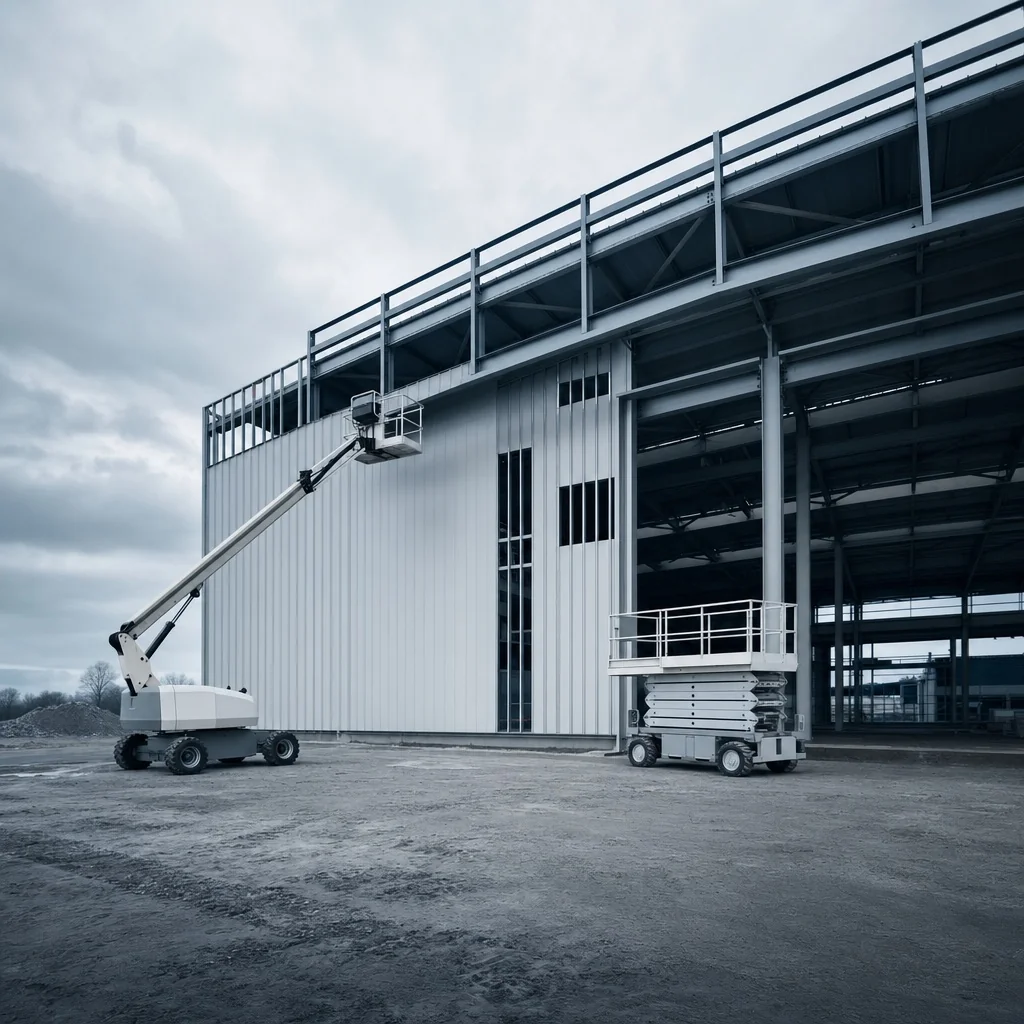
- Need up-and-over reach around piping, conveyors, or canopies? Consider boom lifts. See: /aerial-lift-rental/ and /boom-lift-rental/
Narrowing the scissor choice by measurements
- Platform height: confirm overhead work elevation, then add room for tool stance and fixtures.
- Machine width: check doorways, columns, and aisle widths in local distribution buildings.
- Weight and floor loading: verify slab capacity where lifts cross joints or mezzanines.
- Power source: electric for interior work; engine power typically pairs with outdoor rough-terrain models.
Typical Odessa use cases
- Indoor inventory, lighting, and HVAC service in large warehouses: slab scissors sized for aisle width.
- Exterior façade work at commercial facilities: rough-terrain scissors with larger platforms.
- Maintenance at medical and technical buildings: compact electrics for clean, quiet access.
Actual site conditions, the selected unit’s instructions, and facility procedures govern what can be done at height, especially when winds and dust escalate.